The Best Jamaican Food for Comfort and Celebration
Jamaican food has a way of meeting the moment. It can soothe, fortify, wake up the appetite, feed a crowd, or turn an ordinary Sunday into a proper gathering. That range is part of what makes it so beloved, both on the island and far beyond it. A bowl of soup on a rainy evening, a pan of rice and peas beside roasted chicken, a late-night patty grabbed from a bakery case, these are not just meals. They are rituals, memories, and markers of home.
What stands out most in Jamaican cooking is its emotional range. Some dishes are quiet and restorative. Others are loud, smoky, spicy, and built for music, company, and celebration. Many do both at once. A plate of curry goat at a family party can feel festive, but it also carries the deep comfort of patience, repetition, and recipes learned by watching someone else at the stove. The best Jamaican food holds that balance. It feeds the body, certainly, but it also anchors people to place, family, and time.
Why comfort tastes different in Jamaican kitchens
Comfort food in Jamaica does not always mean mild food. That is one of the first misunderstandings outsiders often https://www.google.com/maps?cid=11425353456438405488 have. Heat, spice, smoke, allspice, thyme, scallion, ginger, and Scotch bonnet can still feel deeply comforting when they are part of familiar cooking. Comfort comes less from blandness and more from recognition. It is the smell of pimento wood smoke drifting from a roadside jerk pan. It is the steam from a pot of soup on a Saturday. It is the sweetness of fried plantain beside something salty and rich.
Texture matters just as much as flavor. Jamaican comfort often leans into tenderness and contrast. Soft yam against peppery broth. Crisp fried dumpling with flaky saltfish. A patty shell that shatters slightly before giving way to seasoned filling. These details are not incidental. They are part of why certain foods feel complete.
There is also the practical side. Many classic Jamaican dishes were shaped by thrift, endurance, and ingenuity. Hearty soups stretch ingredients. Saltfish keeps well and transforms into a memorable meal. Tougher cuts become luxurious when given enough time. That history gives the cuisine some of its force. Even celebratory dishes often have roots in making the most of what was available.
The foods people reach for when they need comfort
Ask ten Jamaicans what they crave when they are tired, homesick, under the weather, or simply hungry for something familiar, and you will get strong opinions. Still, a handful of dishes come up again and again.
Soup, especially on a Saturday
Soup is one of the clearest expressions of Jamaican comfort. It is substantial, not a starter but a meal in itself, often thickened with ground provisions such as yam, cocoyam, pumpkin, green banana, and dumplings. The best versions are layered and generous. You taste the broth first, then the starches, then the herbs, then the pepper that warms rather than overwhelms.
Chicken foot soup has its loyalists, and deservedly so. Cow cod soup inspires debate but is cherished by those who grew up with it. Red peas soup, often enriched with small dumplings and salted meat or beef, can be deeply satisfying on a cool or wet day. Mannish water, though more often associated with events and parties, also belongs in the comfort category for many people because it is restorative, peppery, and full of character.
A good Jamaican soup should not feel watery or timid. It should have body. The pumpkin, starches, and long simmering do important work. When made well, it is a whole kitchen in one pot.
Ackee and saltfish, the national dish for good reason
Ackee and saltfish earns its reputation because it captures the Jamaican palate so completely. Salted cod, sautéed with onion, tomato, scallion, thyme, and often Scotch bonnet, brings depth and savoriness. Ackee, when properly cooked, is delicate, buttery, and almost creamy. Together they make sense in a way that is difficult to explain until you taste them.
Served with fried dumpling, boiled green banana, roasted breadfruit, or festival, this dish can move between breakfast, brunch, and lunch without missing a beat. It is especially comforting because it feels abundant without being heavy. The saltfish gives structure, the ackee softens the edges, and the sides determine the meal’s mood. Fried dumpling makes it richer. Boiled foods make it steadier and more grounding.
There is a technical point worth noting here. Ackee must be handled correctly. It should only be eaten when naturally opened and properly prepared. In experienced hands, it is one of the most distinctive ingredients in Caribbean cooking. In careless hands, it is not worth the risk. That is why the best ackee and saltfish often comes from cooks who learned by practice, not guesswork.
Porridge that actually satisfies
Jamaican porridge deserves more respect outside the Caribbean than it usually gets. This is not thin, forgettable breakfast food. Cornmeal porridge, peanut porridge, plantain porridge, and hominy corn porridge can be rich, spiced, and deeply filling. Cinnamon and nutmeg are common, vanilla is often present, and condensed milk may lend sweetness and body. Some cooks add a pinch of salt that sharpens everything.
A bowl of porridge can be the first comfort a child knows and the breakfast an adult still seeks out decades later. It is affordable, nourishing, and surprisingly nuanced when made by someone who understands consistency. Too thin, and it feels mean. Too thick, and it becomes gluey. The sweet spot is silky and substantial, able to coat a spoon but still pour.
Patties, coco bread, and the comfort of convenience
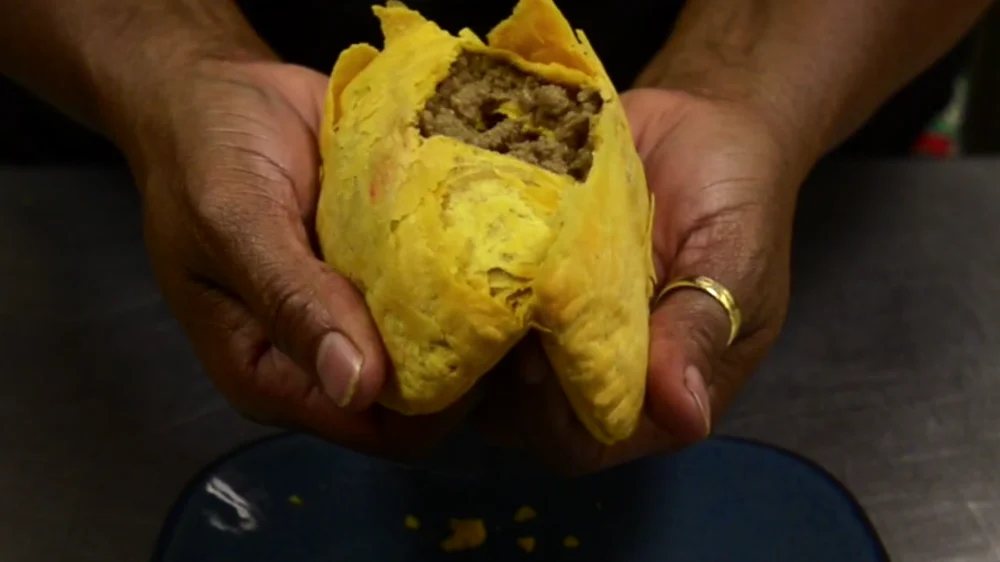
Not every comfort food requires a table and a long sit-down meal. Jamaican patties belong to the realm of everyday relief, the kind of food people grab on the way to work, between errands, after school, or late in the afternoon when hunger turns urgent. The pastry should be flaky and lightly stained with turmeric or curry, the filling well-seasoned and moist. Beef is the standard, but chicken, vegetable, soy, shrimp, and even ackee versions all have their place.
The classic move is to tuck the patty into coco bread, which softens the edges of the spice and turns a snack into something more filling. It is practical, portable, and satisfying in a very specific way. Many people can remember the bakery or shop where they had their best one, because a great patty is not generic. The pastry texture, the heat level, and the ratio of filling to crust all matter.
Brown stew chicken and the language of Sunday dinner
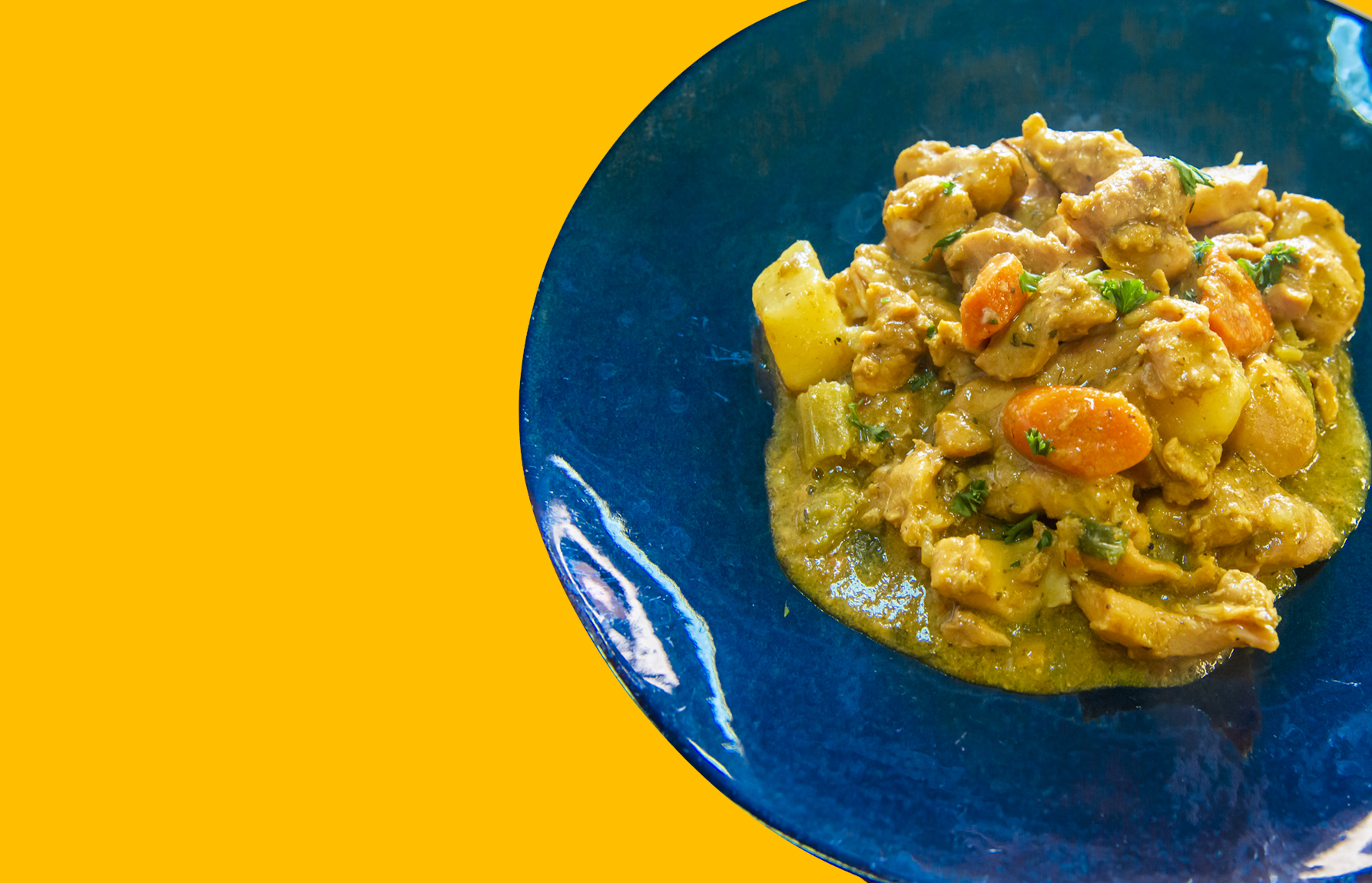
If jerk is the public star of Jamaican food, brown stew chicken is its domestic counterpart. It lives in home kitchens and on Sunday tables. The chicken is browned first, then simmered with onion, sweet pepper, carrot, tomato, thyme, scallion, and enough gravy to pull rice and peas into the conversation. It is savory, lightly sweet, aromatic, and generous.
What makes brown stew chicken so comforting is its balance. It has enough intensity to feel special, but it remains accessible and familiar. Children tend to love it. Elders approve of it. It reheats well. It sends the right smell through a house. Some dishes announce celebration; brown stew chicken often announces that people will eat well and leave full.
The dishes that turn a meal into an occasion
Celebration in Jamaican food is not only about luxury ingredients. It is about labor, smoke, abundance, and the expectation that people will gather. The food often arrives in trays, foil pans, large pots, and heaped serving spoons. It is meant to be shared, debated, compared, and returned to.
Jerk, the fire at the center of the party
Jerk is one of Jamaica’s great contributions to world cooking, and it is still often misunderstood. True jerk is not just a bottled seasoning or a generic spicy marinade. At its best, it is a method and a flavor tradition rooted in seasoning meat with scallion, thyme, allspice, Scotch bonnet, ginger, garlic, and other aromatics, then cooking it slowly over pimento wood. That smoke is not optional if you want the full experience.
Jerk chicken is the most widespread version, but jerk pork has an even stronger claim on many devotees. The fat renders, the edges char, the inside stays juicy, and every bite carries smoke, heat, sweetness, and spice. At a celebration, jerk often functions as the dish people hover around. They may sit down later for the rest of the spread, but the jerk pan draws a crowd immediately.
Good jerk should not be one-note hot. You want fragrance before impact. You want the sweetness of the meat and the complexity of the seasoning to survive the fire. Too often outside Jamaica, jerk gets flattened into mere spiciness. The real thing is far more layered.
Curry goat, patient and unforgettable
Curry goat is one of those dishes that announces a special event even before the lid comes off the pot. Weddings, birthdays, repasts, holiday gatherings, community celebrations, it appears where feeding people well matters. The meat is marinated, then cooked slowly until tender, often with potatoes added near the end to absorb the sauce. The curry powder is important, but so are thyme, scallion, garlic, ginger, black pepper, and Scotch bonnet.
What separates an excellent curry goat from an average one is patience. Goat needs time. Rush it and the texture remains stubborn. Cook it well and it softens into something rich and deeply savory, with a sauce that clings to rice and peas. A well-made version carries warmth rather than raw heat, and the slight gaminess of the meat becomes part of its charm instead of a flaw.
For large events, curry goat makes sense practically as well as culturally. It holds well, scales well, and rewards cooking in quantity. Some foods lose something when made for a crowd. Curry goat often gets better.
Escovitch fish and the brightness of a feast
Escovitch fish brings sharpness and contrast to the table. Usually made with fried whole fish, often snapper, then topped or dressed with a spicy vinegar mixture of onion, carrot, bell pepper, and Scotch bonnet, it cuts through heavier dishes and adds visual drama. It is especially common around Easter and beach outings, but it also turns up whenever people want something festive and unmistakably Caribbean.
This is a dish that relies on tension. The fish is crisp, savory, and hot. The vegetables are tangy, lightly pickled, and bright. The pepper gives force. The vinegar wakes up the palate. With bammy or festival on the side, escovitch feels complete, both celebratory and direct.
Freshness matters here more than almost anywhere else. If the fish is not fresh, no amount of seasoning can rescue it. If the escovitch dressing is dull or timid, the dish loses its point. When both are right, it is one of the most vivid plates in Jamaican cooking.
Rice and peas, the quiet requirement
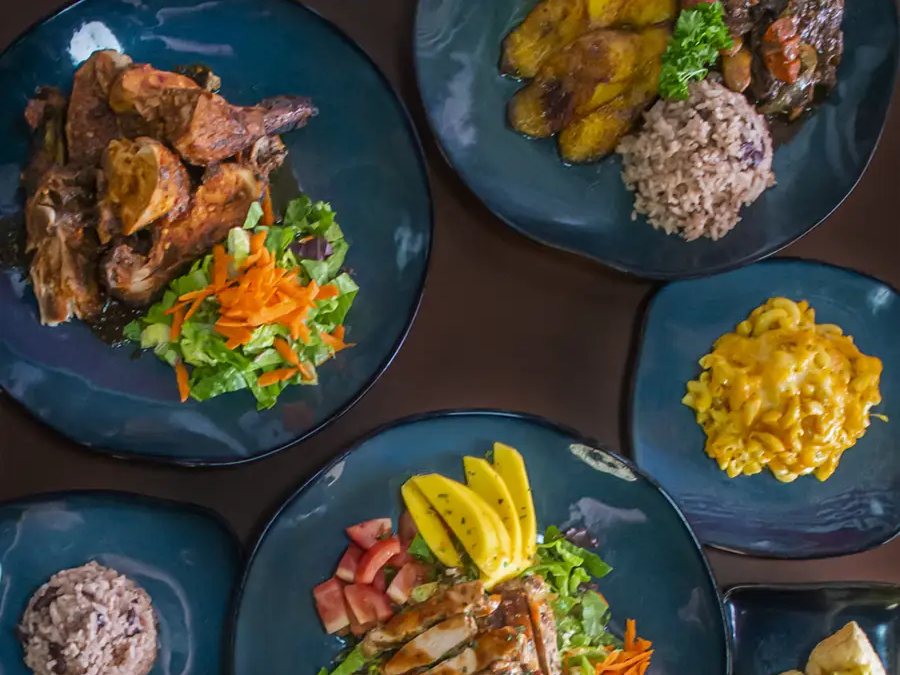
Few foods are as central to Jamaican meals as rice and peas, and yet it rarely gets top billing. It should. Properly made rice and peas is not background starch. Cooked with coconut milk, thyme, scallion, Scotch bonnet, and kidney beans or gungo peas depending on the occasion, it is fragrant, savory, and essential to the meal’s architecture.
At celebratory meals, rice and peas does the crucial work of carrying gravies and balancing bold proteins. It also contributes its own flavor and aroma. If it is dry, underseasoned, or gummy, the entire plate suffers. If it is light, fragrant, and separate without being hard, it elevates everything around it.
One of the easiest ways to judge a cook’s range is by the rice. Flashy mains attract attention, but rice and peas reveals discipline.
The side dishes that make the plate feel whole
Jamaican meals often depend on side dishes that are much more than filler. Fried plantain adds sweetness and soft texture. Festival contributes a lightly sweet, crisp-chewy contrast that works beautifully with jerk and fish. Bammy, made from cassava, absorbs flavor while keeping its own earthy character. Boiled dumplings, yam, and green banana speak more to the comfort side of the cuisine, but they show up everywhere because they are satisfying and reliable.
Breadfruit deserves special mention. Roasted over flame or baked, then served with ackee and saltfish, mackerel, or simply butter, it has a subtle nuttiness and a sturdy but tender texture that many people adore. It does not try to dominate the plate. Instead, it gives a meal backbone.
Callaloo also plays an important supporting role. Whether served as a side or worked into breakfast, it adds a grassy, mineral depth that rounds out saltfish, fried dumpling, and other rich items. It is one of those dishes that regular eaters miss keenly when they cannot find it.
Drinks and desserts that belong at the same table
Celebration in Jamaican food does not stop at the savory dishes. Sorrel, especially around Christmas, brings tartness, spice, and a jewel-like red color that instantly changes the mood of a table. Ginger beer, when made with a real fiery kick, can stand up to a heavy meal better than many soft drinks. Irish moss, peanut punch, and carrot juice have their own loyal followings and can feel almost like meals in themselves.
On the dessert side, Jamaican fruit cake, often called black cake, is a holiday cornerstone, dense with soaked fruits and dark flavor. Sweet potato pudding, with its rough, earthy sweetness and spice, is one of the most satisfying desserts in the region. Gizzada, coconut drops, grater cake, and toto each speak to a style of baking and sweet-making that values texture and spice as much as sugar.
If the meal has been especially rich, a small slice of black cake or a modest square of pudding often works better than an elaborate plated dessert. Jamaican sweets tend to understand that appetite has limits, even when hospitality does not.
If you are choosing what to order or cook first
For someone newly exploring Jamaican food, the range can be overwhelming. A sensible approach is to taste both the comforting side and the celebratory side of the cuisine, because each reveals something different.
- Start with ackee and saltfish if you want the national dish and a real sense of Jamaican breakfast culture.
- Choose jerk chicken or jerk pork if you want the most iconic celebratory flavor, especially from a specialist with a proper grill or pan.
- Order curry goat when you want to understand why Jamaican party food inspires such loyalty.
- Try soup, especially red peas or chicken foot, if you want to experience Jamaican comfort at its most nourishing.
- Never skip the sides, particularly rice and peas, festival, fried plantain, or bammy, because the meal makes full sense with them.
What separates a good Jamaican meal from a forgettable one
Seasoning is the first test. Jamaican food should taste intentional. Herbs should be present, not decorative. Pepper should have a role, even if restrained. Salt should support, not dominate. Smoke, if promised, should be detectable. Sweetness should act as balance rather than distraction.
The second test is texture. Rice and peas should not clump into paste. Fried fish should keep some crispness beneath the escovitch dressing. Dumplings should be cooked through without becoming heavy. Jerk should show char without drying out. These are not fussy standards. They are basic signs of care.
The third test is proportion. Jamaican cooking often deals in bold flavor, so balance is everything. Too much Scotch bonnet can erase the rest of the dish. Too much browning sauce can make stew taste muddy. Too much coconut milk in rice and peas can leave it greasy. The best cooks know when to stop.
There is also the matter of context. Some dishes shine in specific settings. Jerk eaten fresh off the grill beside a road, wrapped in foil, with smoke still clinging to it, is different from jerk served from a steam table an hour later. Escovitch fish by the sea feels different from the same dish in a crowded dining room. Soup eaten from a cup in a bustling market has its own authority. Jamaican food is portable, but place still shapes experience.
The emotional pull of the table
The reason Jamaican food endures so powerfully is not just flavor, though flavor is a huge part of it. It is the way the food supports life’s rhythms. There is something for early morning, for hard work, for rain, for Sunday, for holidays, for grief, for birthdays, for visitors, for long conversations. Some cuisines excel at refinement. Jamaican food excels at presence. It shows up fully.
That is why the same kitchen can produce a simple bowl of porridge before dawn and a feast by afternoon. It is why people argue lovingly about whose curry goat is best or whether festival should be sweeter than usual. These dishes carry standards, memories, and loyalties. They are not interchangeable.
The best Jamaican food for comfort and celebration is not one single plate. It is a repertoire. It includes the steaming soups that repair you, the breakfasts that steady you, the patties that rescue a busy day, the jerk that perfumes the air before you even see it, and the curry goat that tells you this gathering matters. Together they form one of the most generous food traditions anywhere, a cuisine built not only to impress, but to sustain.
When that food is made with care, the effect is immediate. You taste history, adaptation, and pride. You taste the island’s love of spice, smoke, sweetness, and contrast. Most of all, you taste a style of cooking that understands exactly what a meal can do, whether the day calls for solace or a full-scale celebration.
Reggae Pot Jamaican Grill
2243 S Monaco St Pkwy #104
Denver, CO 80222
+1 720-410-2956
FAQ About jamaican food
What is the best Jamaican food to try in Denver?
The best choice depends on your tastes. Popular options include jerk chicken, curry goat, slow-cooked oxtail, and savory patties. Reggae Pot lists these dishes on its menu, with sides such as rice and peas and plantains. Ask the Denver team about current availability and spice levels.
Is Jamaican food very spicy in Denver?
Heat varies by dish and preparation. Jerk seasoning often includes scotch bonnet peppers alongside herbs and allspice, while other dishes may have gentler seasoning. Ask about the heat of the specific dish and any sauce before ordering.
What are some popular Jamaican snacks?
Jamaican patties are a popular snack made with flaky pastry and savory meat or vegetable fillings. Other options include fried dumplings and festival, a sweet fried dough often served with savory dishes. Availability varies, so check the current menu when ordering.